Total Monthly Bills Calculator
Calculate Your Monthly Financial Obligations
Enter your recurring monthly expenses below to see your total bill burden and income allocation.
Total Monthly Bills
Remaining Income
Income Spent on Bills
*This calculator compiles your recurring contractual obligations. It does not account for variable cash expenses like daily food purchases, dynamic medical bills, or discretionary lifestyle spending.
Living paycheck to paycheck is rarely a symptom of low earnings; more often, it stems from a lack of structural transparency into dynamic household spending. In a modern economy, our hard-earned cash is chipped away by multiple digital platforms, service providers, and loan institutions via automated clearance sweeps. When your bills are automated across different dates throughout the month, tracking the true baseline cost of your lifestyle becomes incredibly challenging.
Our interactive Total Monthly Bills Calculator is built to consolidate these fragmented numbers into a single operational view. By inputting your non-negotiable living allocations alongside your incoming net revenue streams, you instantly gain visibility into what percentage of your income is committed to keeping the lights on before you buy a single cup of coffee.
The Core Financial Balance: Fixed vs. Variable Commitments
To successfully establish a long-term household savings profile, it helps to separate what you spend into two structural classes:
- Fixed Contractual Bills: These are the predictable expenses that arrive like clockwork. Your rent check, home mortgage note, car payment matrix, cellular contracts, and internet subscriptions carry fixed price commitments. They represent your operational baseline.
- Variable Usage Bills: These fluctuate based on personal usage, season, or consumption patterns. Municipal water utilities, seasonal air conditioning electrical bills, credit card minimum statements, and fuel costs change month over month, requiring regular monitoring.
How to Navigate and Use This Tool
Gaining absolute financial clarity requires complete accuracy. Use these clear, step-by-step practices to generate a precise operational overview:
- Input Net Income First: Enter your true take-home pay (the net amount deposited into your checking account after taxes, health care plans, and retirement matching are deducted).
- Aggregate Statement Balances: Review your banking mobile applications to capture realistic metrics for your utility outlays, digital connectivity infrastructure, and credit limits.
- Account for Debt Commitments: Include minimum required monthly allocations for auto lines, personal notes, student financing programs, and credit facilities.
- Evaluate the Output Metrics: Analyze the resulting balance ratio to see exactly how much capital remains for personal investments, emergency emergency funding, or entertainment tiers.
The 50/30/20 Rule Blueprint
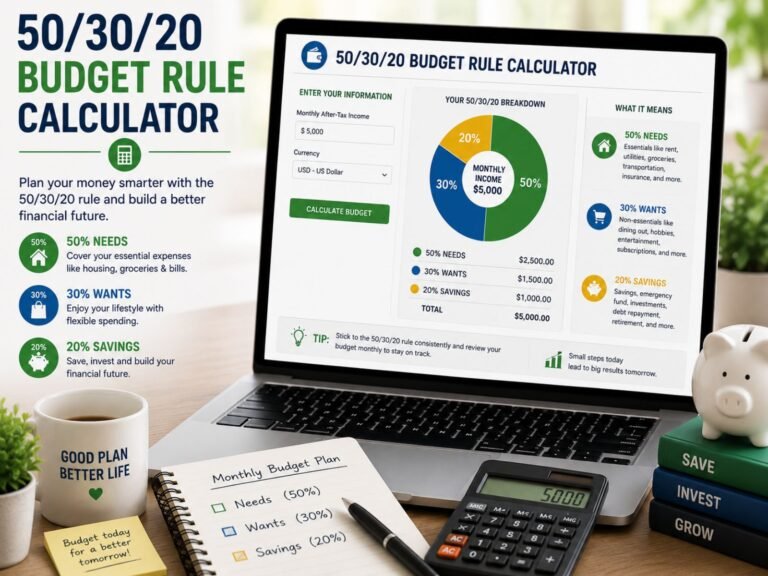
Once you calculate your total monthly bill metrics, compare your operational ratio to the standard 50/30/20 budgeting rule framework. This economic design allocates net household revenue across three clear pillars:
50% to Essential Needs: This segment includes housing infrastructure, utilities, core connectivity, transit requirements, and baseline groceries. If your total monthly bills calculator displays a ratio exceeding 50% of your take-home pay, your lifestyle may be over-leveraged, leaving you vulnerable to financial strain if your income drops.
30% to Discretionary Wants: This covers non-essential lifestyle costs like restaurant dining, boutique fitness club passes, luxury apparel purchases, and leisure travel plans.
20% to Wealth & Protection: This allocation is reserved for high-yield savings goals, investment brokerage portfolios, and paying down debt principal beyond the minimum requirements.
Frequently Asked Questions
What is considered a monthly bill versus a daily living expense?
A monthly bill is a recurring, contractually obligated expense tied to a specific due date or recurring billing cycle (like rent, utilities, or insurance). Daily living expenses are flexible, transaction-based costs that you control in real-time (like dining out, buying groceries, or purchasing apparel).
What percentage of my take-home income should ideally go toward bills?
According to standard personal finance rules like the 50/30/20 blueprint, your essential monthly bills and needs should ideally consume no more than 50% of your total net take-home income. Keeping your bills under this threshold ensures plenty of room for savings and lifestyle expenses.
What is the easiest method to track and organize separate billing due dates?
The most reliable strategy is a combination of a dedicated digital calendar with alerts set 5 days before a bill is due, syncing all payments to a primary central hub, or contacting your providers to align all individual statement due dates to the same time of the month.
Should I set up automatic draft payments for all my recurring bills?
Autopay is an excellent way to prevent late fees and protect your credit score. However, for variable accounts like energy utilities or credit cards, monitor your statements before the auto-draft date to ensure no billing errors occur or overdraw your account balance.
How can I accurately calculate variable utility bills that spike in the summer or winter?
The safest approach is to total your past 12 months of utility invoices and divide by 12 to find your true monthly baseline average. Alternatively, check if your utility provider offers an “equal payment plan” or “balanced billing” option to flatten out seasonal spikes into a predictable monthly fee.
What is the fastest way to lower my fixed monthly bills without canceling services?
Call your current cellular, internet, and insurance providers annually to check for new promotional pricing, audit your subscriptions to eliminate unused accounts, and check your insurance policies to see if raising your deductibles can lower your monthly premium fees.
What immediate steps should I take if I cannot afford to pay a core bill on time?
Contact your service provider immediately before the due date. Most companies offer hardship programs, temporary extensions, or restructured deferred payment schedules if you reach out proactively rather than letting the bill lapse into default.
How can I avoid hidden fees on my regular monthly bills?
Review the itemized line items on your statements at least once a quarter. Keep an eye out for dynamic structural price hikes, administrative add-on fees, or premium features you didn’t explicitly authorize, and contact customer support to dispute them.
Is it better to pay bills on a weekly basis or once a month?
Align your bill payments with your cash flow cadence. If you get paid bi-weekly, splitting your high-value bills (like housing) into smaller increments across paychecks can help keep your checking account liquid and prevent a single large cash drain at the start of the month.
Can consistently paying my monthly bills on time improve my credit score?
Absolutely. Your payment history accounts for 35% of your standard credit score. Consistently paying credit accounts and loans on time builds a positive track record. Additionally, programs like credit reporting boosts allow you to link utility and cellular payments to improve your file.